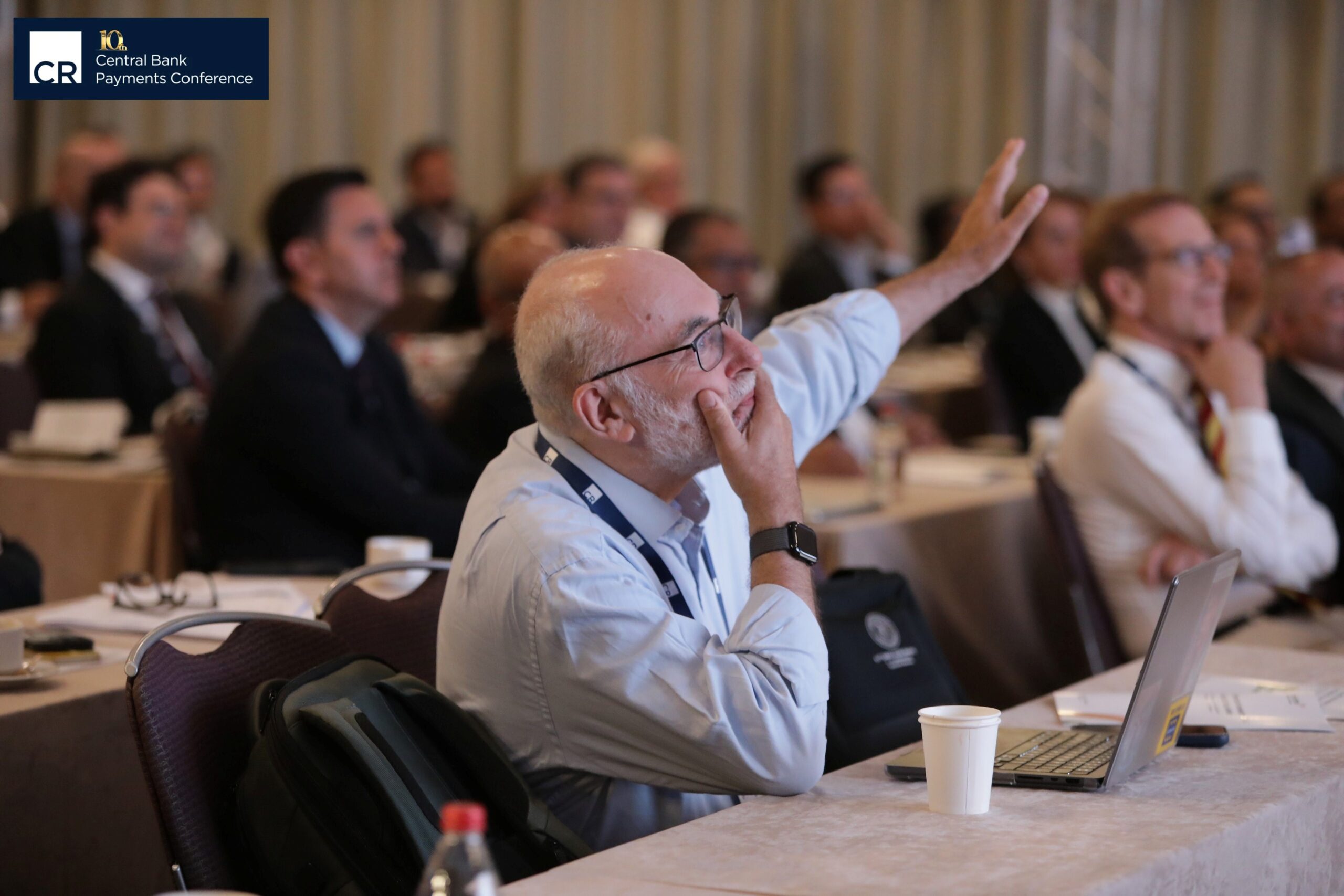

Money20/20 Middle East wrapped its second edition in Riyadh on 14-16 September, and it has clearly become one of the standout dates on the global fintech calendar rather than just a regional gathering. It has nearly 400 speakers (including me and my Fime colleagues) and 350+ exhibiting brands. Personally, I thought it was much improved on last year’s event: it had been reorganized across two halls instead of three and it was much easier to navigate from talk to talk and from meeting to meeting! And it was great to catch up with some old friends and make news ones in the coffee breaks and at the mixer. When it comes down to business though, there were three clear themes that I saw across the sessions:
1. AI is moving forwards, but trust is a bottleneck. Sessions like “From AI Pilot to Product” and “Life on Autopilot” focused less on what AI can do and more on the harder question of letting AI agents actually manage money on someone’s behalf: data governance, security, compliance, and who is accountable when an AI “nudge” tips into manipulation. Commentary circulating on LinkedIn echoed this: one practitioner noted that “demonstrations are easy, but agents acting on behalf of users require grounded, trusted data and clear governance” before banks will let them loose with real transactions. Fime is doing some great work in this area, so it was fascinating for me to “benchmark” our approach on guardrails against other industry initiatives.
2. Saudi Arabia is positioning itself as a fintech hub, not just a host. The event doubled as a progress report on Vision 2030’s “third phase,” with officials framing regulation as an enabler rather than a brake – testing innovations in sandboxes before licensing them at scale. A concrete example: SAMA’s sandbox work on supply-chain finance has already generated more than SAR 1.4 billion in activity ahead of full licensing. I was interested in the discussions about regional integration as well: there seemed to be practical progress here. Saudi Arabia and Qatar’s central banks agreed to let each other’s national cards (mada and HIMYAN) work across both countries, and SAMA announced upcoming support for Alipay+ and Apple’s Tap to Pay.
3. Capital is flowing fast into consumer fintech. The deal-making was heavier than in year one: BNPL player Tabby raised a Series F valuing it at $6.5 billion, and digital payments firm barq closed a $329.5 million Series A at a $1.85 billion valuation. To me, these and other deals suggested that global capital is flowing to the region.
Outside the conference rooms I got involved in some very interesting discussions around stablecoins and digital assets. As you might imagine the issue of sovereignty came up more than once and I predict this will be central theme for next years.